




By Oluwatoyin Mathnuel
The Lagos State Traffic Management Authority (LASTMA) recently celebrated giant stride of decongesting Lagos state from traffic gridlocks.
The event was a three days activities of seminars, lectures, reflection,.empowerment and appreciation.
LASTMA which was the vision of president Bola Ahmed Tinubu in year 2000 while he was a governor has made Lagos a free traffic flow of 95% .
Lagos state Deputy Governor Dr. Obafemi Hamzat who represented Gov. Olusola Sanwo-Olu affirmed this in his speech:
“When Asiwaju Bola Tinubu assumed office in 1999, Lagos was choking on its own success. The city’s 8 million population then (now over 20 million) faced daily commutes that turned 30-minute trips into 4-hour ordeals. Road accidents were rampant, and economic productivity suffered enormously
The solution, given birth to on July 15, 2000, was LASTMA – initially a 500-man squad armed with whistles, hand signals, and sheer determination under pioneer GM Engr. Adegboyega Coker. Early challenges were daunting: inadequate technology, poor road infrastructure, and deeply entrenched bad driving habits. But today it’s the use of modern technologies that reduces Lagos traffic drastically.
LASTMA GM Mr. Olalekan Bakare-Oki, in his brief chat with the media could not but applauded the authenticity of LASTMA in curbing traffic including accident management ,his words;
‘Imagine Lagos before the emergence of LASTMA. The roads were experiencing total chaos, gridlocks, but with the emergence of LASTMA, we have been able to improve the situation. Overtime, LASTMA has evolved from Traffic Management to Accident Management. We do this on a daily basis; rescuing lives and vehicles involved in accidents as a result of our broad collaborations with LASAMBUS,.the Fire Service, Federal Road Safety Commission, and all other relevant agencies .
The LASTMA GM’s exclusive stikes a careful balance between celebrating LASTMA’s achievements and acknowledging the road ahead. While the agency has made remarkable strides in traffic management, the fundamental pressures of rapid urbanization continue to pose significant hurdles.
As Lagos looks toward its smart city future, these challenges frame an urgent call to action. The solutions being implemented- from tough new laws to youth education and smart enforcement technologies – aim not just to manage traffic, but to fundamentally transform Lagos’ relationship with mobility. The success of these measures will determine whether Africa’s largest city can turn its traffic management silver jubilee into a golden age of urban transportation.
Lagos state Commissioner on Transportation Engr. Oluwaseun Osiyemi narrated the initiatives form of a broader strategy to showcase Lagos as a model for African urban mobility. “By 2027, we want delegates from across the globe to witness firsthand how an African megacity has successfully tackled its notorious traffic challenges through innovation and technology,” Osiyemi stated.
The solar drone program, developed in partnership with the Lagos State University Department of Aerospace Engineering, represents Africa’s first large-scale application of unmanned aerial vehicles for urban traffic management. Each unit can cover a 5-kilometer radius, transmitting live feeds to LASTMA’s central command hub where AI algorithms analyze traffic patterns and predict potential congestion points.
The Green Mobility Corridors initiative aligns with Lagos State’s commitment to reducing transport-related emissions by 30% before 2030. Early designs show the lanes will feature special road surfaces that generate solar power and include intelligent lighting systems that adjust brightness based on usage patterns.
As for the Integrated Payment System, trials will begin in early 2026 with 50,000 test users before a full public rollout. The system promises to eliminate the current hassle of multiple transport cards and cash transactions, while providing valuable data to optimize route planning and service frequency across all modes of public transportation.
With these ambitious projects, Lagos is not just preparing to host an international summit, but fundamentally reimagining how a rapidly growing African metropolis can move efficiently into the future. The eyes of the global transportation community will be on Nigeria’s commercial capital in 2027, and LASTMA intends to give them plenty to talk about.
Special Adviser to the Governor on Transportation, Mr. Sola Giwa, presented stark statistics that reveal the immense pressure facing Africa’s most populous city.
“Each sunrise brings approximately 400 additional vehicles onto Lagos roads,” Giwa revealed, “while our physical road infrastructure expands at a modest 2% annual rate.” This glaring mismatch between vehicle population growth and road capacity expansion continues to test the limits of the city’s transportation network, despite LASTMA’s celebrate successes.
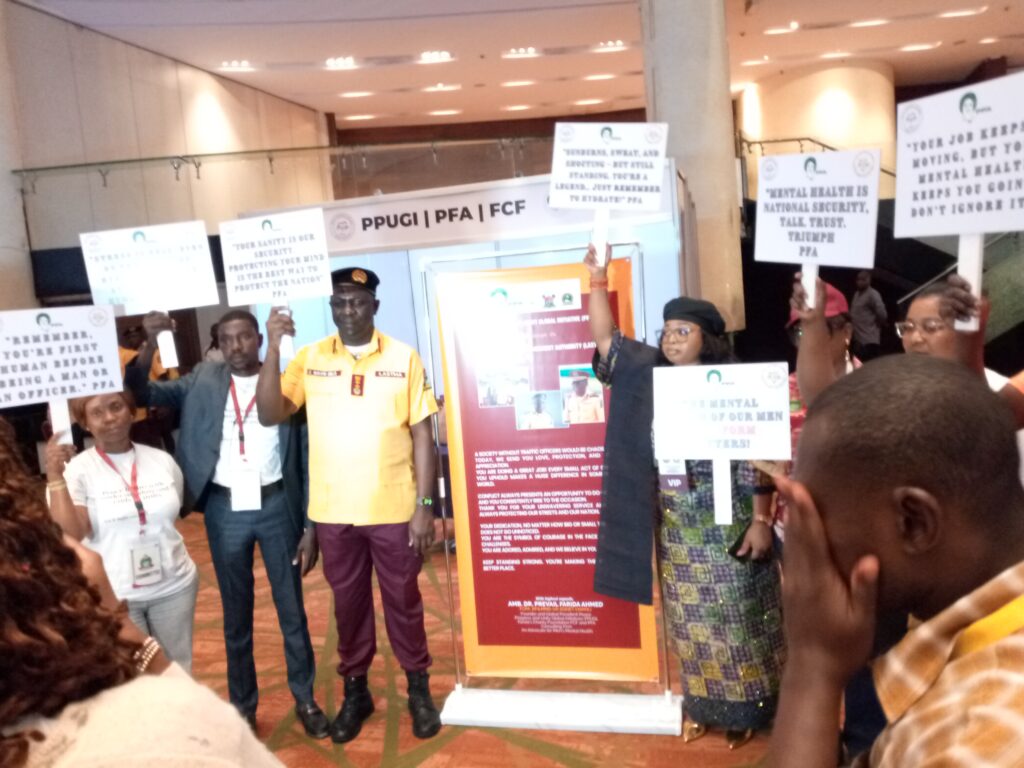
The human dimension of Lagos’ traffic woes came into sharp focus as Giwa disclosed disturbing figures on officer safety. “In the past five years alone, 147 LASTMA personnel have sustained severe injuries from assaults while performing their duties,” he stated, pausing for emphasis. “These aren’t just statistics – these are public servants who leave their families each morning to keep Lagos moving, only to face violence from those they serve.” Giwa concluded.
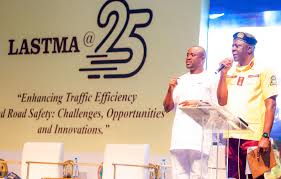
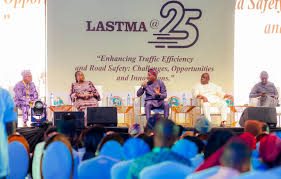
LASTMA silver Jubilee which was held on the 15th- 17th July 2025 with the Theme ‘ Enhancing Traffic Efficiency, Safety On Lagos Roads, Challenges, Opportunities And Innovations’ was fully attended by security operatives and agencies, dignitaries across the country , monarchs most importantly pupils and students who were impacted with knowledge on safety consciousness.
