



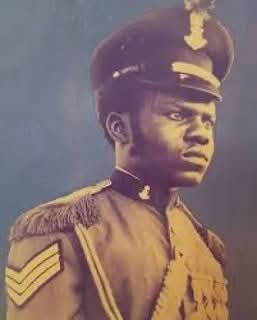


Early Life and Military Career
Simeon Apata was a retired Army Brigadier-General in the Nigerian Army and a veteran of the Nigerian Civil War (1967–1970). Like many officers of his generation, he rose to prominence during a period when Nigeria faced serious national challenges of unity, security, and development. His experience in the war left a lasting impression on his disciplined approach to life and service.
The Founding of Apata Memorial High School
In 1980, Apata founded Apata Memorial High School in Isolo, Lagos. The school was conceived as a military-style private boarding institution, reflecting his belief in discipline, structure, and moral education. With an estimated 1,550 students and 150 teachers, the school quickly grew into one of the most respected institutions in Lagos State, attracting children from elite families and aspiring middle-class Nigerians.
The school’s culture mirrored Apata’s military background — discipline, academic rigor, and leadership were emphasized. Today, Apata Memorial High School remains one of the leading private schools in Oshodi-Isolo Local Government Area, preserving his legacy in education.
Defender of His Community
Beyond his military career and school project, Apata was known locally as a fearless defender of his community. At a time when armed robbery plagued Lagos neighborhoods, he reportedly confronted and even killed some criminals who threatened peace in the area. His willingness to personally protect his environment won him respect but also placed him in danger.
Assassination in 1995
On January 8, 1995, Simeon Apata was assassinated by gunmen. His death shocked Lagos and left a devastating mark on his family. Many believed that his bold confrontations with criminals might have contributed to his killing. The tragedy created a vacuum not only in his household but also in the community where he was regarded as a protector and a pillar of strength.
Family Legacy and Connection to Teni
Apata left behind wives, children, and his school, which is now managed by his three wives. Among his children is Teniola Apata, popularly known as Teni the Entertainer.
Teni, who rose to fame with hit songs like Case and Billionaire, has often reflected on her father’s death in her music. Her song “Wait” was inspired by her mother’s grief and longing after his assassination. Speaking about the track, she explained:
“Wait tells the love story between my mum and dad. I got the inspiration when my dad passed and my mum was crying, wishing he could have stayed back.”
Despite her playful personality and references in songs such as Billionaire — where she famously says her “papa no be Dangote or Adeleke” — many Nigerians still view her as coming from a privileged background due to her father’s achievements and legacy.
Why Simeon Apata’s Story Matters
Simeon Apata’s life story bridges Nigeria’s military history, community defense, and educational development. His assassination reflects the violent realities of Lagos in the 1990s, a time when insecurity and crime threatened urban life. Yet, his legacy continues through his family and especially through Apata Memorial High School, which has shaped thousands of students since its founding.
Through his daughter Teni’s music, his memory lives on — not just as a military officer and community defender, but as a father whose influence continues to inspire.
