



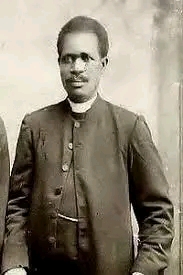


Before the days of vinyl records in Nigerian homes, before Fela Kuti took Afrobeat global, there was a singing priest—Josiah Jesse Ransome-Kuti, the man whose hymns carried the gospel into Yoruba hearts and homes. A pioneer in more ways than one, he was the first Nigerian to ever record a gospel album, and one of the most innovative evangelists of his time.
Born on June 1, 1855, in Igbein, Abeokuta, J.J. came from an Egba family that straddled tradition and Christianity. His father, Likoye, was a Yoruba traditionalist; his mother, Anne Ekidan, a devout Christian convert. His early education was at CMS Training Institution, Abeokuta, and later at the prestigious CMS Training Institute in Lagos.
He began his career as a schoolteacher, teaching music at the CMS Girls’ School, Lagos, before being posted to Abeokuta. But J.J. wasn’t content with traditional missionary methods. He believed that the gospel should sound familiar to his people—preached in their language, sung in their rhythms. So he began composing and translating Christian hymns into Yoruba, blending Western musical structures with African soul.
Ordained a deacon in 1895 and priest in 1897, Ransome-Kuti became a beloved figure across the Egba country. In 1911, he became the pastor of St. Peter’s Cathedral Church, Ake, and by 1922, he was named a Canon of the Cathedral Church of Christ in Lagos—a major honor for an African clergyman in colonial Nigeria.
But what set him apart most was his musical legacy. In 1922, he travelled to London and recorded 43 Yoruba hymns with Zonophone Records. These were pressed and released in 1925, making him the first Nigerian artist to ever release a commercial record. His voice, preserved on brittle shellac discs, carried praises like “Ile ya” and “Keresimesi de” to the ears of Christians across Nigeria. The British Museum still houses some of these recordings today.
Aside from his spiritual and musical life, J.J. also served as a district judge in Abeokuta between 1902 and 1906—a rare feat for a clergyman. He also believed in community development and education. Married to Bertha Olubi in 1882, he raised over 60 children, biological and adopted, creating a legacy of nation-builders.
Among his descendants were towering national figures:
Funmilayo Ransome-Kuti, Nigeria’s foremost feminist and nationalist
Dr. Olikoye Ransome-Kuti, former Health Minister
Dr. Beko Ransome-Kuti, fearless human rights activist
And Fela Anikulapo-Kuti, the Afrobeat legend who called his grandfather “a priest with a rhythm”
J.J. Ransome-Kuti died on September 4, 1930, at the age of 75. But his songs never died. They live on in Yoruba churches, in dusty hymnals, and in the very idea that faith, culture, and creativity can walk hand-in-hand.
