



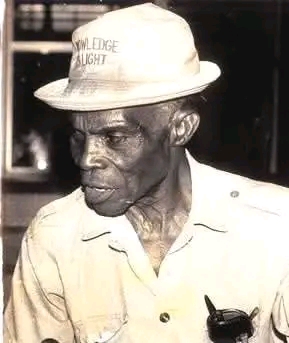
Augustus Taiwo Solarin, fondly known as “Tai Solarin,” remains one of Nigeria’s most influential educators, social critics, and moral voices of the 20th century. Renowned for his unwavering advocacy for secular education, civil rights, and good governance, Solarin’s life was marked by radical integrity, intellectual honesty, and fearless resistance to oppression. Often described as eccentric due to his trademark attire—shorts, sneakers, and a khaki hunting cap—Tai Solarin was, in truth, a visionary reformer whose convictions shaped modern Nigeria in profound ways.



Early Life and Education
Born on August 20, 1922, in Ikenne, Ogun State, Solarin grew up in colonial Nigeria and experienced firsthand the influence of Christian missionary education. He later served in the British Royal Air Force during World War II and subsequently earned a degree from the University of Manchester in the United Kingdom.
These experiences abroad profoundly influenced his views on religion, education, and governance. While many returned to Nigeria to join the ranks of the elite, Solarin chose a different path—one rooted in grassroots service, secular values, and defiance against authoritarianism.
The Mayflower School and Educational Revolution
In 1956, Solarin founded the Mayflower School in Ikenne—Nigeria’s first secular educational institution. Unlike mission schools of the time, Mayflower was non-denominational and focused on developing critical thinking, discipline, and civic responsibility. It emphasized manual labor, simple living, and a strong sense of nationalism.
Under Solarin’s leadership, the school became a symbol of educational reform in Nigeria. Students were taught to question norms, challenge dogma, and engage with the social issues affecting their country. The school’s ethos reflected Solarin’s personal beliefs: rationality over superstition, service over status, and discipline over luxury.
Public Intellectualism and Activism
Beyond the classroom, Tai Solarin was one of Nigeria’s most outspoken social critics. He wrote fearlessly on issues of corruption, bad governance, military dictatorship, and societal hypocrisy. His syndicated newspaper columns, essays, and public statements resonated with the Nigerian public—particularly during times of political repression.
In 1975, he published “The Beginning of the End,” a searing critique of General Yakubu Gowon’s military regime for its failure to transition Nigeria to civilian rule. The piece was considered subversive, and Solarin was imprisoned for his dissent. Yet, he remained unrepentant, using every platform available to challenge the abuse of power and advocate for democratic governance.
An Atypical Patriot
Solarin’s public image was as unconventional as his politics. Always dressed in shorts and a simple shirt—often jokingly described as the “uniform of a village eccentric”—he rejected the trappings of elite status and materialism. He lived simply, worked hard, and practiced what he preached. He also consistently refused religious labels, identifying as a humanist and emphasizing morality without dogma.
His activism extended to several areas of national life, including prison reform, civil liberties, and the fight against systemic inequality. In a time of increasing sycophancy and intellectual cowardice, Solarin stood alone in many battles—earning him both admiration and persecution.
Tai Solarin University of Education (TASUED)
In recognition of his contributions to education and civic life, the Tai Solarin University of Education (TASUED) was established in Ogun State. It is Nigeria’s first university of education, dedicated to producing professional educators and upholding the values Tai Solarin championed: critical inquiry, social justice, and ethical citizenship.
TASUED stands not only as a memorial to his work but also as a living institution committed to his ideals.
Death and Enduring Legacy
Tai Solarin passed away on July 27, 1994, but his legacy remains vibrant. He is remembered not merely as an educator but as a conscience of the nation—a man who refused to be silent in the face of injustice, no matter the cost.
His writings continue to inspire civil rights activists, educators, and reformers across Nigeria and beyond. In an era where political patronage often silences dissent, Solarin’s life offers a template for integrity, service, and courage.
Augustus Taiwo Solarin was a man ahead of his time—a radical educator, fearless critic, and patriotic humanist. Through his school, his writings, and his personal sacrifices, he taught a nation to think critically, live simply, and stand courageously.
In the annals of Nigerian history, Tai Solarin is more than an icon—he is a standard.
