



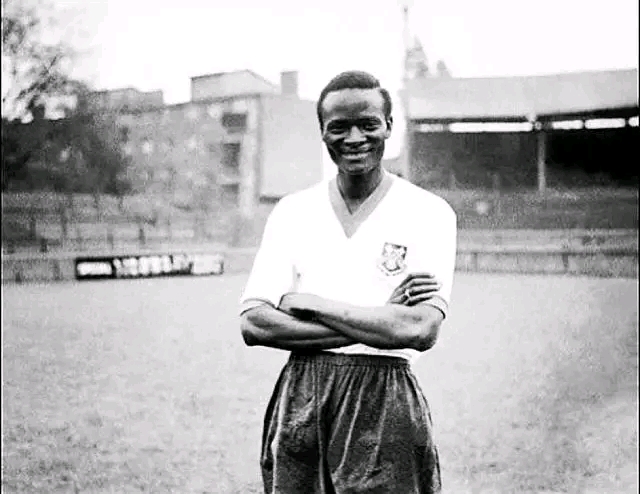


Before the likes of Micheal Opara, Felix Owolabi, Segun Odegbami, late Samuel Okwaraji, late Rashidi Yekini, Daniel Amokachi, ant others in Nigeria football league ( Green Eagle)
There was Tesilimi Olawale Ayinde Balogun (27 March 1931 – 30 July 1972) a famous Nigerian footballer and coach.
Balogun as fondly called featured at both the professional and international levels as a forward, later becoming the first African to attain the status of a qualified professional football coach.
Balogun received his education in Port Harcourt, graduating from St. Mary’s Catholic School. He played for several Nigerian teams, including Apapa Bombers, Marine Athletics, UAC XI, Railways XI, Jos XI, Pan Bank Team, Dynamos Club, and SCOA XI. During his football career in Nigeria, he clinched the Challenge Cup five times out of seven final appearances. He became the first player to score a hat-trick in the competition when Pan Bank triumphed 6–1 over Warri in 1953.
After his initial tour with a Nigerian select team in 1949, Balogun returned to the UK in August 1955, signing with Peterborough United. However, Balogun never made a league appearance for Peterborough, and later played for Skegness Town before joining Queens Park Rangers, where he netted 3 goals in 13 Football League appearances during the 1956–57 season. After leaving QPR, he played non-league football with Holbeach United.
Balogun also represented the Nigerian national team for 12 years.
Balogun achieved a groundbreaking feat as the first African to qualify as a professional football coach. He later coached Nigeria’s national football team at the 1968 Summer Olympics.
The Teslim Balogun Stadium in Lagos, Nigeria, bears his name as well as an erected statue in recognition of his contributions to football. Additionally, the Teslim Balogun Foundation was established posthumously to support families of Nigerian ex-international footballers facing hardship.
Balogun earned the nickname “Thunder” for his powerful shots, and was also called “Balinga” for the same reason. While coaching young players during his school visits, he was fondly referred to as “Baba Ball.”
Balogun passed away in his sleep on 30 July 1972, at the age of 45. He was survived by many children.
